
FOREST DISTURBANCES WILL INCREASE IN THE FUTURE
Climate change is accelerating the expansion of insect outbreaks, pathogens, and other forest pests worldwide. Warmer temperatures, prolonged growing seasons, and more frequent droughts create favorable conditions for many species to reproduce faster and expand into new regions. At the same time, trees under stress from heat and water shortages become more vulnerable to attacks, reducing their ability to defend themselves against pests and diseases.
One of the clearest examples of this is the European spruce bark beetle (Ips typographus). These tiny insects may be small, but they can cause enormous disturbance when conditions are right. They benefit from climate change in two ways: directly, through faster development and more extended breeding periods, and indirectly, as weakened spruce trees are unable to fight back effectively. The longer and warmer the summer, the more severe the outbreaks tend to be. Higher temperatures speed up the beetle’s life cycle, while extended summers allow earlier swarming in spring and the possibility of a second generation emerging by late summer.
Recent summers have set the stage for significant bark beetle activity in Finland. For example, June 2023 was hot and dry, giving populations a strong head start, although the cooler, wetter July limited outbreaks in some regions. Summer 2024, after a cooler start in June, ended up relatively warm, allowing a second generation to develop in parts of Finland. Although the weather varies from year to year, the bark beetle has consistently reproduced successfully in recent years, and the number of tree deaths has increased steadily. Dead and dying trees are a common sight in forests nowadays.
Looking ahead, the bark beetle is expected to continue its northward migration as the climate continues to warm, presenting new challenges for both forest managers and communities. If warm summers continue to support quick beetle reproduction and tree stress endures, the quiet, green forests of northern Europe may increasingly bear the stark brown scars of bark beetle outbreaks.
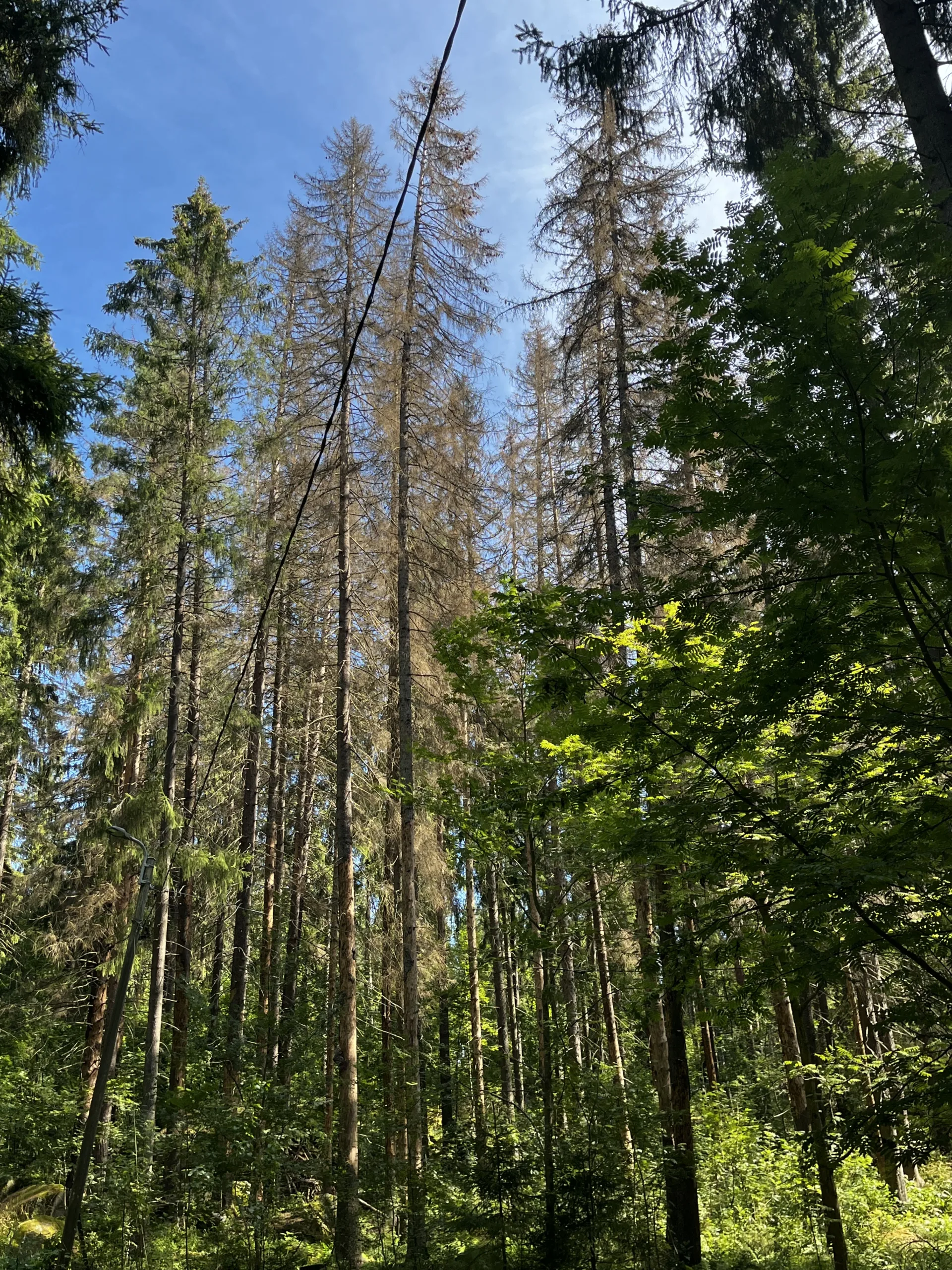
Takeaway: Climate change is not only warming our forests but also tipping the balance in favor of pests, such as the spruce bark beetle. Even small insects can cause enormous damage when trees are stressed and summers are long and warm. Understanding these dynamics is key to protecting the forests that sustain ecosystems, economies, and communities alike. We must act now: monitor outbreaks, strengthen forest resilience, and take steps to protect our forests before it’s too late.